
Major, Minor, and Exotic Currency Pairs Explained
By UMH · Published 5 August 2026 · Updated 5 August 2026 · 2 min read
Major, Minor, and Exotic Currency Pairs Explained
How pair classification affects liquidity, spread, and volatility
Major Pairs
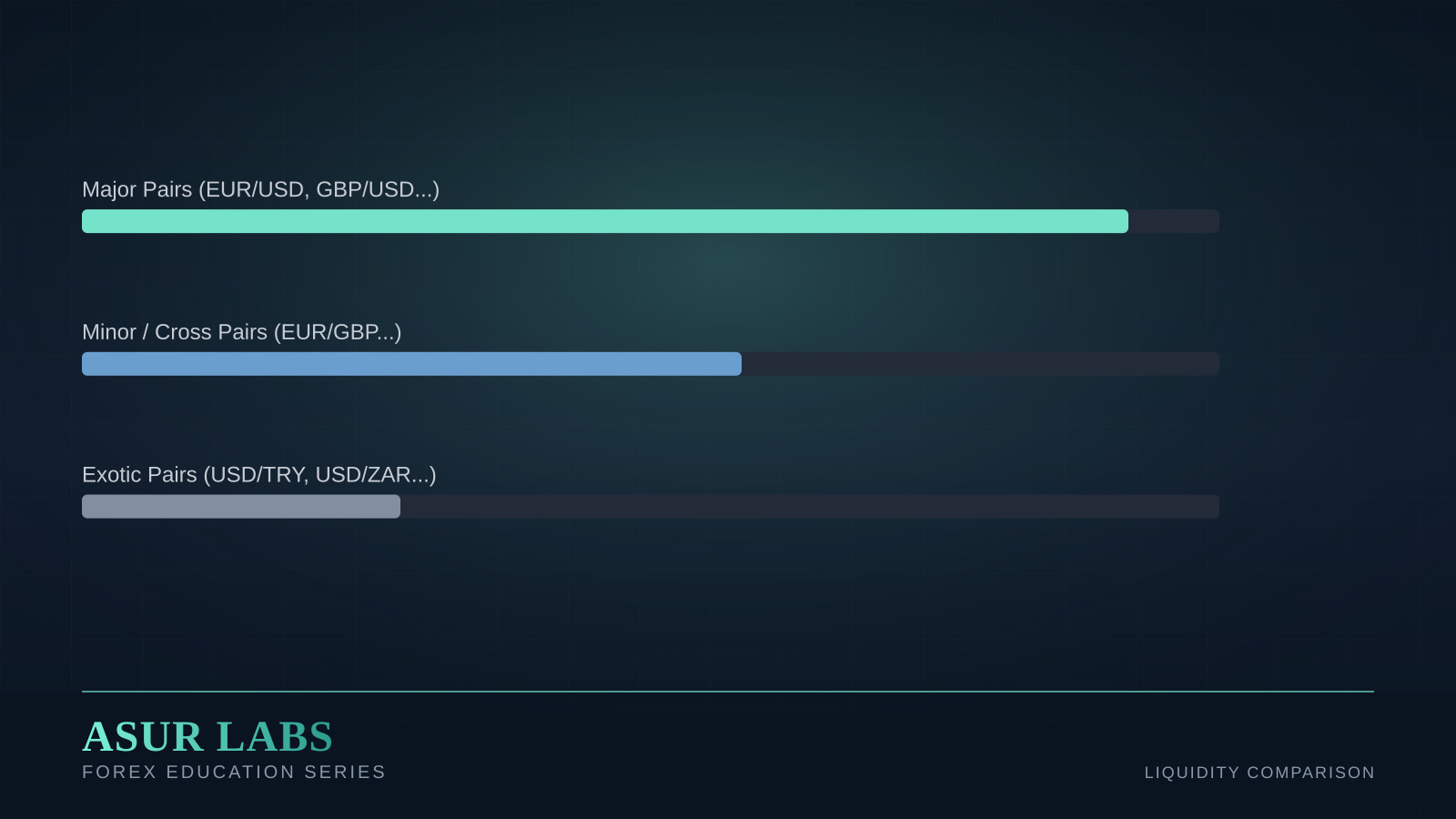
Major pairs always include the US dollar paired with another heavily traded currency — EUR/USD, GBP/USD, USD/JPY, USD/CHF, AUD/USD, USD/CAD, and NZD/USD. These pairs carry the highest liquidity in the forex market, which typically means tighter spreads and more predictable price behavior during normal market conditions.
Minor (Cross) Pairs
Minor pairs, also called cross pairs, involve two major currencies without the US dollar — such as EUR/GBP or AUD/JPY. Liquidity is still healthy, but generally lower than majors, which can mean slightly wider spreads and occasionally choppier price action.
Exotic Pairs
Exotic pairs combine a major currency with the currency of a smaller or emerging economy — such as USD/TRY or USD/ZAR. These carry the widest spreads and the highest volatility of the three categories, often driven by local political and economic factors rather than global macro trends. They require significantly more caution, especially for newer traders.
• Majors — highest liquidity, tightest spreads, most predictable during normal conditions
• Minors — moderate liquidity, moderate spreads, more independent price behavior
• Exotics — lowest liquidity, widest spreads, highest volatility risk
The Asur Labs Approach: SDYKA signals focus primarily on major and select minor pairs, where liquidity supports the tight risk management our systems are built around.
0 comments
Public reading. Respectful participation is available to eligible signed-in members.
Sign in with an eligible membership to comment. Likes and sharing remain public.
Log in to leave a verified review. Likes and sharing remain public.